Showing posts with label read. Show all posts

14 December 2011

READ: Breece D'J Pancake - Trilobites


The second post I made on this blog was about author Breece D'J Pancake, a South Charleston native and Marshall grad who committed suicide at the age of 26. His talents have been celebrated over the years by the likes of Kurt Vonnegut, Chuck Palahniuk and Andre Dubus III.

If you've never read Pancake's work before, I suggest starting with Trilobites, which you can read in full online thanks to The Atlantic, where it was originally published in 1977. "Trilobites" is the first story in Pancake's only printed collection, The Stories of Breece D'J Pancake. I can't recommend this highly enough.

Click here to read Trilobites.

26 November 2011

READ: Happy 2nd Birthday Soft Rock Renegade


I started this blog two years ago today with this post about Malicious Intent. Thanks for the support.

15 September 2011

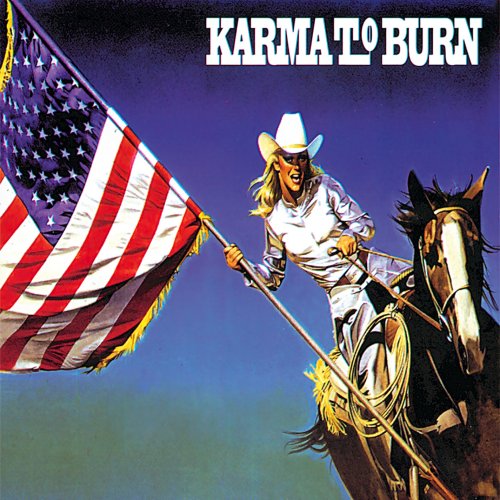
READ: Digital Millennium Copyright Act takes down Karma to Burn post


This morning, I received the following e-mail from Blogger concerning the post of Karma To Burn's Wild Wonderful Purgatory:
Blogger has been notified, according to the terms of the Digital Millennium Copyright Act (DMCA), that certain content in your blog is alleged to infringe upon the copyrights of others. As a result, we have reset the post(s) to \"draft\" status. (If we did not do so, we would be subject to a claim of copyright infringement, regardless of its merits. The URL(s) of the allegedly infringing post(s) may be found at the end of this message.) This means your post - and any images, links or other content - is not gone. You may edit the post to remove the offending content and republish, at which point the post in question will be visible to your readers again.
A bit of background: the DMCA is a United States copyright law that provides guidelines for online service provider liability in case of copyright infringement. If you believe you have the rights to post the content at issue here, you can file a counter-claim. For more information on our DMCA policy, including how to file a counter-claim, please see http://www.google.com/dmca.html.
The notice that we received, with any personally identifying information removed, will be posted online by a service called Chilling Effects athttp://www.chillingeffects.org. We do this in accordance with the Digital Millennium Copyright Act (DMCA). You can search for the DMCA notice associated with the removal of your content by going to the Chilling Effects search page at http://www.chillingeffects.org/search.cgi, and entering in the URL of the blog post that was removed.
If it is brought to our attention that you have republished the post without removing the content/link in question, then we will delete your post and count it as a violation on your account. Repeated violations to our Terms of Service may result in further remedial action taken against your Blogger account including deleting your blog and/or terminating your account. If you have legal questions about this notification, you should retain your own legal counsel.
Whatever.

24 August 2011

READ: Tristan Egolf - Lord of the Barnyard


I was recently in Chicago visiting my old friend Aaron (formerly of The Warriors). Aaron, a native of the Charleston area and son of a retired coal miner, is currently an instructor of creative writing at Columbia College. During my visit, Aaron was nearing the end this book - Tristan Egolf's Lord of the Barnyard: Killing the Fatted Calf and Arming the Aware in the Cornbelt
. Lord of the Barnyard is a fictional biography/history of farm boy John Kaltenbrunner and the Appalachian-affected Middle America coal town of Baker from where he comes.

Salon wrote of Egolf's 1999 debut novel: "He practices a form of shotgun writing -- aim in the right direction and spray words on the page -- always searching for another country-fried turn of phrase that will one-up his last one. Egolf mixes fable, metaphor and pure anger to attack mob mentality, class warfare, the mindless media and the just-under-the-surface madness of the Midwest. His brilliantly warped, pedal-to-the-metal vision has the obsessive quirkiness of a Pynchon, the rough-and-tumble bad-assness of a Daniel Woodrell and more than a malignant touch of the Faulkner who created the Snopeses."
I'm nearly half-way through the book's 400 pages, and my anticipation builds with every new paragraph. In fact, I missed my bus stop yesterday because I was so entrenched in what was going to happen to Kaltenbrunner next. Though the author or the story have no significant relationship to West Virginia (one minor but memorable character is a Mountain State native), Lord of the Barnyard does ring of Appalachian characteristics familiar to anyone from the region. I highly recommend it. Thanks, Aaron.

26 July 2011

READ: Harvey Pekar - Huntington, West Virginia 'On the Fly'


I was at Chicago Midway Airport last night, when my flight got delayed. It was late and I was too tired to finish the book I was reading, so I went looking for some lighter reading. I was browsing the non-fiction section when the words "West Virginia" caught my eye from the spine of one book. I grabbed it and saw the title "Huntington, West Virginia 'On the Fly'" and to my surprise was from the late Harvey Pekar, the famed writer of the underground comic series American Splendor.

I have never read a comic book in my life. But like many, I became a fan of Pekar as a character and creative individual after the 2003 film adaptation of American Splendor, which starred Paul Giamatti as Pekar, who himself was featured in the film.

When I saw "On the Fly," I had to buy it because I lived many a year in Huntington, and was curious why Pekar was writing about the town. The book is, according the the back of it:
"... prime Pekar, recounting the irascible everyman’s on-the-road encounters with a cross section of characters—a career criminal turned limo-driving entrepreneur, a toy merchant obsessed with restoring a vintage diner, comic-book archivists, indie filmmakers, and children of the sixties—all of whom have stories to tell. By turns funny, poignant, and insightful, these portraits à la Pekar showcase a one-of-a-kind master at work, channeling the stuff of average life into genuine American art."
An hour or so after picking up the book, I had breezed through the 160 pages and was left with a smile on my face. The "On the Fly" story, the final of about six character portraits, takes Cleveland-native Pekar to the Huntington for a book festival. In the early pages, it capitalizes on a couple opportunities to poke fun at West Virginians, as Pekar's autobiographical character questions a a couple people's intelligence. By the end, he befriends a group of smart, creative, passionate Huntingtonians. His slice-of-life writing style captures the true open-arm nature of Applachians, and it left me proud that someone half-known as a misanthropic curmudgeon could be touched by characters with which I am so familiar.


25 May 2011

READ: Aaron Patrick Flanagan essay on Sago featured in Tarpaulin Sky


Aaron Patrick Flanagan may be known by some in West Virginia as the former frontman for Morgantown hardcore band The Warriors, who was also an important player in the state's music scene in both Charleston and Morgantown for over a decade. Nowadays, the Elkview native is an educator at Columbia College in Chicago and also a poet.

Much of Flanagan's writing has to do with his Appalachian roots, including his most recently published lyric essay about the 2006 Sago Mine Disaster. The piece is featured in the current issue of literary journal Tarpaulin Sky. Flanagan is one of the finest emerging young writers from West Virginia. I encourage anyone to help support his art by purchasing a copy of the print version of Tarpaulin Sky #17 for only $12.


06 January 2011

READ: Jayne Anne Phillips

Here is just a quick introduction to Jayne Anne Phillips, an accomplished novelist and short story writer from West Virginia, who has been praised by the likes of Raymond Carver and Michiko Kakutani. She has published a number of books with Vintage Contemporaries, and is well worth checking out. Here is some more about her from her website:

Jayne Anne Phillips was born and raised in Buckhannon, West Virginia. Phillips graduated from West Virginia University, earning a B.A. in 1974, and later graduated from the Iowa Writers' Workshop at the University of Iowa.

Her first book of stories, Black Tickets, published in 1979 when she was 26, won the prestigious Sue Kaufman Prize for First Fiction, awarded by the American Academy and Institute of Arts and Letters. Featured in Newsweek, Black Tickets was pronounced "stories unlike any in our literature . . . a crooked beauty" by Raymond Carver and established Phillips as an writer "in love with the American language." She was praised by Nadine Gordimer as "the best short story writer since Eudora Welty" and Black Tickets has since become a classic of the short story genre.

Machine Dreams, Phillips' first novel, published in 1984, elegantly and astutely observes one American family from the turn of the century through the Vietnam War. A New York Times best seller, Machine Dreams was nominated for the National Book Critics Circle Award and chosen by the New York Times Book Review as one of twelve BEST BOOKS OF THE YEAR.

Shelter, her 1994 novel, a haunting, suspenseful evocation of childhood rite-of-passage, was awarded an Academy Award in Literature by the American Academy and Institute of Arts and Letters and chosen one of the Best Books of the Year by Publishers Weekly.

Jayne Anne Phillips' works have been translated and published in twelve foreign languages. She is the recipient of a Guggenheim Fellowship, two National Endowment for the Arts Fellowships, and a Bunting Fellowship from the Bunting Institute of Radcliffe College. Her work has appeared most recently in Harper's, Granta, Doubletake, and the Norton Anthology of Contemporary Fiction. She has taught at Harvard University, Williams College, and Boston University, and is currently Professor of English and Director of a new MFA Program at Rutgers-Newark, the State University of New Jersey.

Her newest book Lark and Termite, was a 2009 finalist for the National Book Award for Fiction.

26 November 2010

READ: Soft Rock Renegade turns one year old


One year ago today, I made the first post on this blog. Running a blog that archives music from West Virginia was something I always wanted to do, but I'm a little surprised I have kept it up for a year. It wouldn't have happened without the support and encouragement of those who read SRR, submit material and send me comments. It makes me realize I'm spending time on something people enjoy. Appropriately on the day after Thanksgiving, I say, Thanks.

To celebrate the one year anniversary the best I can from my bed at home, I am reposting the Top 5 most downloaded albums posted to the blog. (And apologies for the cheesy image at the top. Thank Google.) Please take some time and go back through the last year of posts and check out some of the material that is on here. There are so many good bands, albums available for download, videos and more. I hope to be doing this for another year.

Top 5 Most Downloaded Albums on Soft Rock Renegade:

19 November 2010

READ: Jaimy Gordon - Lord of Misrule


Jaimy Gordon's novel Lord of Misrule won the prestigious 2010 National Book Award for fiction. The book, which I have not read yet, is set in the 1970s in the world of horse racing in West Virginia, and was praised by judges for being "vivid, memorable and linguistically rich." Baltimore native Gordon, 66, who has taught at Western Michigan University since 1981, worked as a groom and hot-walker at the Charles Town Race Track in West Virginia after graduating from college in the late 1960s.

"There are certain books whose richness makes it seem as though the writer had material to burn, and Lord of Misrule is one of them. Jaimy Gordon writes with a wonderfully profligate quality. As if a compelling story, an authentic sense of place, and a colorful cast of hustlers, losers, and memorable petty crooks weren't enough, Gordon adds a style at once deeply interior and vividly cinematic."--Stuart Dybek, author of The Coast of Chicago.

Congratulations to Jaimy Gordon. I can't wait to read it.

31 August 2010

READ: Lady Gaga has roots in West Virginia

According to an article in the Charleston Gazette, the mother of pop superstar Lady Gaga grew up in West Virginia's northern panhandle. Cynthia Bissett graduated from WVU in 1976 and moved to New York City where she married Joseph Germanotta. The couple has two daughters, the article reports, and the eldest is Stefani Joanne Angelina Germanotta: aka Lady Gaga.
"Little is known about how much time Lady Gaga may have spent in West Virginia. For the last couple of years, reports and rumors about Gaga's hillbilly roots have been circulating. Lady Gaga may have a whole slew of cousins running around the Mountain State, but none of them have come forward."

24 August 2010

READ: Appalshop hopes to debunk stereotypes of Appalachia


The Louisville Courier-Journal today published a story on Appalshop, the non-profit multi-disciplinary arts and education center in Whitesburg, Kentucky, that produces original films, video, theater, music and spoken-word recordings, radio, photography, multimedia, and books. The article entitled "Appalshop hopes to debunk stereotypes of Appalachia," is a good piece on the incredible work that the center does. I recommend anyone interested Appalachia-based social justice documentary work check out Appalshop's projects - in particular Elizabeth Barret's 2000 documetnary Stranger With a Camera (trailer below). The film explores the complex relationship between filmmakers and journalists covering social issues in Appalachia and the people in their films and images, framed by the 1967 murder of a Canadian filmmaker by a Kentucky landlord who was angry over media images during the War on Poverty.

Check out the Courier-Journal article and take some time to learn more about the wonderful projects of Appalshop.

Watch the trailer for Stranger With a Camera:


19 August 2010

READ: Ann Pancake - Strange as this Weather Has Been

Last November, this blog featured short story author Breece D'J Pancake. Pancake was a South Charleston native and Marshall alumnus whose life and potential was cut way too short by suicide in 1979 when he was only 26. Posthumously nominated for the Pulitzer Prize, Pancake was revered by writers such as Andre Dubus III and Chuck Palahniuk. His writing style was compared to the likes of Ernest Hemingway.

Of no relation, another writer by the same memorable surname has risen to literary success from the Mountain State. Having grown up in Romney and Summersville, West Virginia, Ann Pancake's fiction tells first-person tales of life in rural Appalachia. In 2001, Pancake published a collection of short stories entitled Given Ground, but it was 2007's novel Strange as this Weather Has Been that shows her skill to create sincere characters, and to define places.

According to Pancake's website, "Strange As This Weather Has Been features a West Virginian town in the midst of the latest coal boom, and plagued by the mountaintop removal strip mining that is ruining what is left of their mountain life. As the mine turns the mountains to dust and wastewater, workers struggle with layoffs and children find adventure in the blasted moonscape craters. And down below, the hollow’s inhabitants live with the constant threat of a black flood that could wash out their world without notice."

With ease, Pancake writes about the struggles of poverty and the divided interests between rural and urban Americans. The language and voices of her characters are authentic and their personalities and lives are unique but familiar. Like another Pancake almost three decades prior, Ann Pancake writes words that not only strike a chord with those from the hills, but prove just as effective and interesting with those unfamiliar with life in Appalachia.

*Please, check your local independent bookstore before buying online.

15 April 2010

READ: WVRockScene Blog


Nick Harrah at the blog WVRockScene.blogspot.com was gracious enough this week to do a post about Soft Rock Renegade. First, thanks to Nick for the support of the blog, but also the support of the West Virginia music scene.

While SRR serves mostly as an archive of music of the past, WVRockScene has been an up-to-date source for happenings in the Mountain State since at least January 2008. His nearly 300 posts to the site have included reviews of new records and shows; interviews with local musicians; music and video posts; event/show announcements; and general news about bands, tours, releases and more. Taking pride in their work, Nick and crew have done an wonderful job of promoting artists and shows and maintaining an impressive array content including a Top 10 CDs of 2009 list, a roast of Huntington's Jeff Ellis, and news of a Byzantine reunion. And for West Virginia ex-pats like myself, the blog has been essential in keeping up with what is new in my home state. So thanks again to Nick and WVRockScene.blogspot.com for the good work and for the kind words about this blog.

08 April 2010

READ: Michael Shnayerson - Coal River


I met Michael Shnayerson in Charleston once, but have not read this book. I will this weekend. We should all read this book.

Synopsis: One of America’s most dramatic environmental battles is unfolding in southern West Virginia. Coal companies are blasting the mountains, decapitating them for coal. The forested ridge tops and valley streams of Appalachia—one of the country’s natural treasures—are being destroyed, along with towns and communities. An entire culture is disappearing, and to this day, most Americans have no idea it’s happening.

Michael Shnayerson first traveled to the coal fields four years ago, on assignment for Vanity Fair. There he met an inspiring young lawyer named Joe Lovett, who was fighting mountaintop removal in court with a series of brilliant and daring lawsuits. He also met Judy Bonds, whose grassroots group, the Coal River Mountain Watch, was speaking out in a region where talking truth to power was both brave and dangerous. The two had joined forces to take on Massey Energy, the largest and most aggressive of the coal companies, and its swaggering, notorious chairman, Don Blankenship.

Coal River is Shnayerson’s account of this dramatic struggle. From courtroom to boardroom, forest clearing to factory floor, Shnayerson gives us a novelistic and compelling portrait of the people who risked their reputations and livelihoods in the fight against King Coal.

06 April 2010

READ: Denise Giardina - Mourn the Mountains


From the New York Times:

OP-ED CONTRIBUTOR

Mourning in the Mountains

Published: April 6, 2010

Charleston, W.Va.

PEOPLE in West Virginia had hoped that on Monday night we would gather around televisions with family and friends to watch our beloved Mountaineers face Butler in our first chance at the men’s N.C.A.A. basketball title since 1959. Men working evening shifts in the coal mines would get to listen thanks to radio coverage piped in from the surface. Expectations ran high; even President Obama, surveying the Final Four, predicted West Virginia would win.

Then, on Tuesday morning, we would wake to triumphant headlines in sports pages across the country. At last, we would say, something good has happened to West Virginia. The whole nation would see us in a new light. And we would cry.

Instead, halfway through Saturday night’s semifinal against Duke, our star forward, Da’Sean Butler, tore a ligament in his knee, and the Mountaineers crumbled. And on Monday evening, while Duke and Butler played in what for us was now merely a game, West Virginians gathered around televisions to watch news of a coal mine disaster.

On Tuesday, the headline in The Charleston Gazette read instead: Miners Dead, Missing in Raleigh Explosion. And we cried.

Despite the sunny skies and unseasonably warm weather, the mood here in southern West Virginia is subdued. As of Tuesday afternoon, 25 men have been confirmed dead, two are critically injured, and four are missing and presumed dead. Their fellow West Virginians work round the clock and risk their own lives to retrieve the bodies.

Already outrage is focused on Massey Energy, owner of the Upper Big Branch mine. Massey has a history of negligence, and Upper Big Branch has often been cited in recent years for problems, including failure to properly vent methane gas, which officials say might have been the cause of Monday’s explosion.

It seems we can’t escape our heritage. I grew up in a coal camp in the southern part of the state. Every day my school bus drove past a sign posted by the local coal company keeping tally, like a basketball scoreboard, of “man hours” lost to accidents. From time to time classmates whose fathers had been killed or maimed would disappear, their families gone elsewhere to seek work.

We knew then, and know now, that we are a national sacrifice area. We mine coal despite the danger to miners, the damage to the environment and the monomaniacal control of an industry that keeps economic diversity from flourishing here. We do it because America says it needs the coal we provide.

West Virginians get little thanks in return. Our miners have historically received little protection, and our politicians remain subservient to Big Coal. Meanwhile, West Virginia is either ignored by the rest of the nation or is the butt of jokes about ignorant hillbillies.

Here in West Virginia we will forget our fleeting dream of basketball glory and get about the business of mourning. It is, after all, something we do very well. In the area around the Upper Big Branch, families of the dead will gather in churches and their neighbors will come to pray with them. They will go home, and the same neighbors will show up bearing platters of fried chicken and potato salad and cakes. The funeral homes will be jammed, the mourners in their best suits and ties and Sunday dresses.

And perhaps this time President Obama and Americans will pay attention, and notice West Virginia at last.

Denise Giardina is the writer-in-residence at West Virginia State University.

22 March 2010

READ: Plural Us Singular interviews Jeremiah Munsey


Aaron Flanagan is a Charleston native booked shows around the state, as well as fronted the Morgantown hardcore band The Warriors. Aaron, a faculty member at Columbia College in Chicago where he received an M.F.A. in poetry, now runs the blog Plural Us Singular. The fairly new blog is a series of interviews with writers and other creative types talking about literature, art, screen, sports and more.

Plural Us Singular most recently interviewed Jeremiah Munsey, the Morgantown native and singer of Law Biting Citizens who is now an M.F.A. playwriting student at UNLV. In the interview, Jeremiah and Aaron discuss all things mentioned above from Daniel Day Lewis, poverty, folk-allure and French football. It is a lengthy, but interesting and entertaining read. To get an idea what former West Virginia punk-hardcore scene players are up to now, check it out.


03 March 2010

READ: Jeannette Walls - The Glass Castle


Many are probably familiar with The Glass Castle, the courageous memoir by freelance journalist Jeannette Walls. With grace and a sense of humor, Walls tells of growing up as part of a dysfunctional family of vagabonds - her brother and two sister and their father, an gambling alcoholic inventor, and their mother, eccentric artist. The rootless family travels the country in search of a break (and to build an ambitious house of glass), moving from Arizona to California to Nevada before eventually settling in the southern coal town of Welch, West Virginia. The book is an unbelievable tale that is wild and laugh-out-loud funny at its highest points, horrifying and tear-worthy at its lowest. Though the Walls children are consistently a victim at the hands of their parents outlandish personalities and others who come and go from their lives, the writer always keeps her chin up and pushes forward.

Though, only about one-third of the book takes place in Welch, the pages contain some of the most shocking and encouraging moments of the story. The Walls family and their story may be extraordinary, but The Glass Castle gives an honest and unparalleled insight into the many struggles of a life of poverty in the Southern West Virginia coalfields. Jeannette Walls has written a book that is impossible for anyone to forget - especially a West Virginian.


04 January 2010

READ: The Life and Rhymes of Meuwl: A Tribute to Samuel Harshbarger


EDITOR'S NOTE: This week on the blog we will be doing a tribute to the life and music of our dear friend Samuel Harshbarger, aka Meuwl. We will be posting downloads, videos, photos and more as a retrospective of his all-too-short musical career as one of West Virginia's finest hip-hop and graffiti artists and most genuine people. To begin, we asked our good friend and one of Sam's best friends and producer Justin Leonard, aka Leno/L-No, to write some words about Meuwl. Here is that with a lot more to come, so we invite you to please check out the work of this incredible artist. RIP Meuwl.

The Life and Rhymes of Meuwl
By JUSTIN LEONARD
On November 5, 2009, the West Virginia music scene and world at large lost a true legend. Samuel Bridges Harshbarger, known better as Meuwl or PSST passed away on that day - at only 29 years old, it was too soon. While most know Sam as an amazing artist, musically as Meuwl and half of the Rabble Rousers, or as graf writer PSST, I knew him as a friend. A best friend at that. I grew up skateboarding with Sam and have known him since the 8th grade. He was a special guy. One that excelled at anything he tried, first skateboarding and soccer, then music and art - he was always the best.

I first heard him rhyme at an open mic at the Empty Glass in late 2002. I bumped into a friend at the mall, who asked me if I was going to see him. At the time I didn’t even know he rapped. He had just come back to Charleston from Pittsburgh and we hadn’t hung out in a while. After that night, nothing musically for me would be the same again. I had been in several punk/hardcore bands but had always wanted to make hip-hop. I decided on that day that I would learn to make beats, and since I had musical experience and some stage presence, I would be his hype man. We went on to form Dayone Global Media together, and recorded two albums - 2004’s “Sooooo Hot Right Now” mixtape and 2006’s “The Chelsea Grin” as the duo Killer Affiliates. Sam went on with our friend/frequent collaborator B. Rude to form the Rabble Rousers and recorded “Tastes Like Crazy” in 2008. They played more shows than anyone I can think of between 2008-2009 and had an East Coast tour in the works, with dates in NYC, New Jersey, Philly, Pittsburgh, Baltimore and D.C., but unfortunately that won’t happen now.

As a graf writer, Sam got up more than your average writer. The now-infamous 120 counts of graffiti/vandalism he was served around 2002 is the highest ever in Charleston that I know. He was known for his signature PSST tag (which you could not avoid ANYWHERE on I-79 between Charleston and Pittsburgh for about two years), and the funk-bot character now immortalized in a number of tattoos. He was also a skilled glassworker and produced high quality glass pipes and jewelry (I’m still sporting a scar on my thigh from one of his pipes, a pair of cargo shorts and skateboarding with Seizeone about 20 beers deep.) He was an artist in the truest sense, and the musical side could not have existed without the visual.

As I said before, for most people, this was all they knew of Sam. I feel very fortunate to have thousands of memories of him that only a few people share. This was the guy who used to camp out at whoever’s parents were out of town’s house until they got back. The guy who I woke up hungover from one of said parties to find him finishing cleaning the house and chatting with my grandmother in the kitchen like it was his own grandmother. The guy who in 75% of the existing photos of him is wearing at least one article of my clothing. The guy whose last Newport was mine and vice versa.

Luckily, there are those of us who will help to keep him alive. Whether it’s B. Rude taking the torch and performing and recording new classics, or Ozker burning legal walls with the rest of the notorious RA graffiti crew, or me still acting as the glue to keep everyone together, we’ll never stop. We can’t stop, because if we do, then we’ve truly lost Sam for good and I can’t let that happen.

We love you man… Dayone/RA all day! LEGENDS NEVER DIE.

For more music and videos, check out youtube.com and search for “Meuwl”, or go to myspace.com/dayonemedia, myspace.com/wvrabblerousers or myspace.com/beerude.

Meuwl and L-No in the studio.

14 December 2009

READ: Davis Grubb - The Night of the Hunter


For those who have never seen the film or heard of the book, the plot of Davis Grubb's 1953 novel The Night of the Hunter is based on the true story of Harry Powers. In 1932, Powers was convicted and hanged for the murders two widows and three children in Quiet Dell, West Virginia (just a few miles south of Clarksburg). The book, Grubb's first, was an instant bestseller and a finalist for the National Book Award. The film was deemed "culturally significant" and selected for preservation by the U.S. National Film Registry. Grubb is a native of Moundsville, where Powers was executed, and wrote a number of novels, including Fools' Parade, which was adapted into the film of the same name starring Jimmy Stewart and Kurt Russell.


30 November 2009

READ: Lee Mayard - Crum


Lee Mayard's novel Crum is a great read, despite the fact that it was banned from Tamarack, the "Best of West Virginia" shopping mall of state-made (overpriced) arts.

Crum is a coming-of-age story is about a teenage boy growing up in the town of Crum in Wayne County, West Virginia. Maynard's biographical character finds himself in all kinds of mischief involving pranks, fights and sex. The book got banned not because its protagonist's sexist, mischievous and cynical behaviors. Nor because it is chock-full of offensive language and scenes. Crum was banned because its about West Virginia and therefore plays up the hillbilly stereotype that plagues the state.

Bullshit. It's not a stereotype and Lee Maynard knows that. This story is about the reality of rural life in West Virginia - but even more so the life of any ornery adolescent boy. Maynard on being banned: "[Banning books] has never worked. All it does is serve to bring attention to something that you didn't want attention brought to. I love those people who try to ban books. We need some stupid people like that around to keep us in check."

Though not the best written novel set in the hills of West Virginia, Crum is casual, often absurd, and sometimes scatological. But it always entertaining and even informative on what life in the coalfields is/was like - and how in a place so easy to get stuck, how individuals long and struggle to breakaway.